
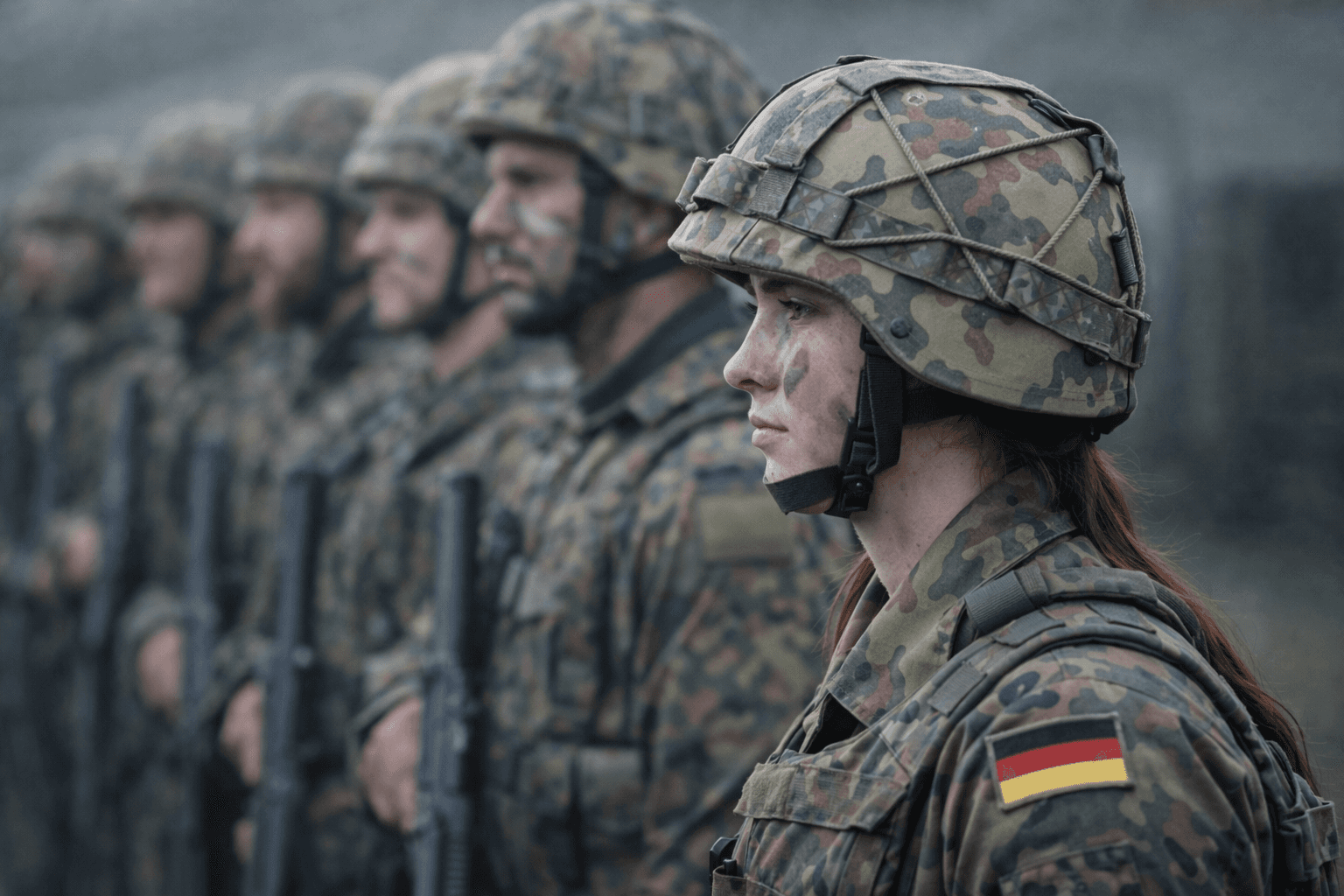
Germany is once again debating military service. This is not a conversation about customs, but rather a way to assess the nation’s readiness for mobilization, the retention of reserves, and overall crisis management. From the standpoint of a cross-domain deterrence strategy (CDD), the key question is whether this debate leads to tangible deterrence and a convincing signalling stance, or if it merely serves as a political symbol.
Conscription was once considered on the decline across Europe. Over the last two decades, it has been described as an ‘outdated’ model of security. However, following Russia’s annexation of Crimea and the war in Ukraine, the topic resurfaced. In Germany, a key concern is whether mandatory, mass-scalable military service can effectively provide mobilization and reserve forces. Additionally, society must rapidly regain its ability to respond to shocks and crises. Only when these conditions are met does deterrence by denial increase, and foreign policy signals gain credibility. Otherwise, voluntarism becomes an empty promise.
•••
The question that guides our inquiry is this: in what circumstances can (partial) compulsory military service effectively contribute to whole-of-society deterrence and national defence? Why is voluntary military service alone often inadequate in this regard? The crux of our argument is effectiveness: mandatory systems may better deliver deterrence.
In our first issue AK1 (Kurzanalyse Kompakt), we examine military service not as a personnel policy tool, but as a cornerstone of a German Cross-Domain Deterrence (CDD) grand strategy. This comprehensive approach considers societal resilience and mobilization capabilities as the tangible foundations for deterrence by denial, or the reduction of an attack’s potential impact. Deterrence does not stem solely from boosting the number of people in service. It emerges when an opponent must take into account the improbability of quick gains.
Mobilization capabilities and critical skills must remain accessible to ensure that society can respond and rebound in the face of adversity. Voluntary military service can contribute to this, but only if it fosters enough resilience. This requires trained reserves, integrated structures and exercises that support mobilization and crisis operations. If these results are not up to par, voluntarism may be perceived as a hollow promise.
The effectiveness of a deterrent is not limited to the mere existence of an obligation. Rather, it is influenced by factors such as enforceability, the quality of training, integration of reserves, and regular exercises. The concept of resilience is deliberately defined more broadly than wartime contingencies alone: ‘effective crisis management’ also includes terrorist incidents, extreme weather events, and severe disruptions to critical infrastructure. In these circumstances, military service can cultivate a set of skills that are valuable in civilian life, such as adaptability, meticulous logistical thinking, efficient resource management, and consistent performance under pressure. Two key design aspects emerge from international comparisons. The first is the length of service, or the depth of training, which can range from a symbolic baseline qualification to a genuine competency and lasting asset. The second is the integration of military service into a comprehensive system of mobilization, organization, reserve architecture, and societal readiness. AK1 transforms these insights into a tangible political objective leading to a policy recommendation.
Problem Definition: Resilience as a Deterrence Strategy
Germany’s main vulnerability is not a lack of military strength, but rather the risk that a highly interconnected society can be disrupted before reaching the level of war. Threats include sabotage, cyberattacks, disinformation, terrorism, extreme weather, and overlapping crises. Adversaries rarely seek open combat; instead, they try to paralyse society and politics. They want to sow distrust, divide communities, and polarize them. Making crucial decisions that paralyse can achieve strategic objectives without resorting to open conflict. Thus, resilience gains strategic importance.
Cross-Domain Deterrence (CDD) acknowledges that deterrence goes beyond military power. Rather, it is the art of preventing an opponent from achieving their objectives by imposing costs in various domains. In this approach, resilience is not just a domestic issue, but a crucial defensive strategy. A resilient society can withstand shocks, maintain stability, and bounce back quickly, making attacks less attractive. This decreases the attacker’s anticipated benefits and lengthens and complicates their operations. Therefore, the probability of a military escalation decreases.
Germany’s central analytical question is how to define resilience concretely enough that it becomes a tangible deterrent against potential adversaries. Recent decades have seen an emphasis on professionalism, efficiency, and international deployment in the German Army, resulting in a significant reduction of the ‘human infrastructure’ needed for domestic mobilization and crisis management. A decline is observed in the national routine, the bonds to the reserve, and the crisis management skills of society as a whole. In response, AK1 considers the extent to which military service or conscription, as cornerstones of a comprehensive defence and resilience strategy, could address these shortcomings. Military service is not viewed as an end in itself, but as a tool to enhance deterrence and send clear messages to potential adversaries.
Situation and context: WDModG 2025 as a step towards military service
Germany is not planning a sudden reintroduction of conscription, which has been suspended since 2011, but rather a gradual transition. Initially, the system will be voluntary, with administrative and registration systems being rebuilt to enable mobilization. This approach is politically easier, because it avoids immediately calling people up. Despite its significance for security policy, it is worth noting that the Bundeswehr can only register and assess a new group of recruits annually and mobilize them quickly in a crisis.
The Military Service Modernisation Act (Wehrdienstmodernisierungsgesetz, WDModG) introduces a new, more appealing form of military service. Beginning in early 2026, all 18-year-olds will be required to complete a standardized questionnaire to assess their abilities and willingness. Men must comply with the law, while women have the option to participate voluntarily. At the same time, mandatory medical and aptitude exams will resume for men eligible for conscription, with those born after 2008 as the initial focus. The implementation process will be gradual, providing sufficient time for administrative and organizational preparation. However, the service remains voluntary for now. Defence Minister Pistorius has said that this will continue ‘as long as’ the model functions well.
The law is of paramount importance from a strategic standpoint, as it establishes a flexible and robust military service framework. It creates a comprehensive database of information and eligibility evaluations, implements registration and vetting processes, and enhances readiness in response to escalating security threats or increased manpower demands. Crucially, the level of coercion required to join remains elevated. Any partial reintroduction of conscription would not come into effect automatically. Instead, it would necessitate a separate political action, namely, a specific vote of approval or decision by the Bundestag. This also fits the concept, as it maintains the possibility without predetermining the outcome.
The CDD evaluation presents a dilemma, which this Analyse Kompakt addresses directly: despite being a Phase 0 measure, the WDModG can be beneficial, as it technically restores mobilization capabilities. To function as a deterrent, it must first demonstrate its effectiveness during the voluntary enrolment period. Alternatively, a democratically accountable activation mechanism should be in place at an early stage, capable of promptly switching to mandatory and binding selection processes if targets are not met or the security situation deteriorates. In the eyes of an adversary, this action remains ambiguous and uncommitted, signalling intent but offering no assurance of implementation, integration with reserve forces, or a realistic training and exercise regime. This guarantee is the very heart of whole-of-society deterrence and defence.
Causal Logic: How Military Service Generates Denial (Mobilization + Crisis Competence)
Within the framework of Cross-Domain Deterrence (CDD), resilience represents a form of success denial, insofar as it systematically increases the adversary’s cost-benefit calculation. Therefore, resilience is not just a ‘feel-good concept’, but an expression of robustness, recoverability and functional reliability under stressful conditions – that is, the ability to withstand disruption. The goal is to facilitate prompt recovery and maintain essential state functions, even under duress. In this sense, resilience embodies a deterrent logic: it lowers the expected utility of hybrid attacks and increases doubt as to whether such an attack can succeed at all.
This approach views military service as a long-term journey, rather than a single moment. It emphasizes the connection from civilian life to initial military training, followed by ongoing involvement in the reserves, all enhanced by regular exercises that bolster crisis preparedness. Since the details of the Wehrdienstmodernisierungsgesetz (WDModG) are not yet fully finalized, we base our discussion on two fundamental assumptions. First, we assume that conscripts acquire fundamental military skills, such as self-defence and security, during their service, while developing operational proficiency through reserve integration. Second, we posit that they gain practical resilience skills, including an understanding of organizational procedures, repair and improvisation capabilities, foundational logistics knowledge, first aid expertise, and the ability to function effectively in situations of scarcity and stress.
This connection fosters deterrence through negation in three ways. Initially, military service enhances the denial of success by guaranteeing readiness and defending vital hubs. If reserve forces can be counted on to take on domestic defence and site protection duties, including the protection of vital infrastructure, across the entire country, an enemy’s capacity to establish what they call ‘rapid facts’ is significantly limited. Both sabotage and targeted disruption, as well as the exploitation of systemic overload situations, require careful consideration. The key factor is not just scale, but Germany’s ability to quickly organize, allocate tasks effectively, and securely protect critical nodes on a consistent basis.
Second, denial results from what can be called the ‘recovery effect’. A rapidly stabilizing society makes hybrid attacks less effective. RAND defines societal resilience as the ability to withstand crises and restore operational capacity (‘to recover from crisis’). At the same time, broad societal participation is considered a deterrent, signalling the whole of society’s steadfastness. Following attacks, extreme weather events, or infrastructure disruptions, if emergency operations, restart procedures, and crisis discipline take effect quickly, then disruption campaigns and coercive pressure lose their strategic utility. Instead of succumbing to collapse, the system demonstrates resilience and bounces back.
Military service acts as a signalling device, but only if its outcomes are apparent and confirmable. A mandatory form of military service can transmit a potent message that Germany is ready to undertake national defence as a collective responsibility. In light of Germany’s historically rooted strategic restraint, such a decision could be perceived externally as a ‘strategic shift toward seriousness’, provided that it is backed up by action.
The central controversy is made clear: whole-of-society deterrence requires a firm commitment. What matters, therefore, is not the formal label (‘voluntary’ vs. ‘mandatory’), but the reliable results in the areas of reserve integration, training, and crisis preparedness. If a voluntary approach falls short in producing the essential magnitude and longevity, it fails to meet the required level of deterrence within our CDD structure. In the worst case, it sets unrealistic expectations without backing them up with tangible results.
Possible Actions for the Federal Government
Option A: WDModG as Phase 0 (“conscription-ready,” but voluntary)
The Federal Government consistently implements the Military Service Modernization Act (Wehrdienstmodernisierungsgesetz, WDModG) as an entry model. The actual service period remains voluntary, while registration, the standardized questionnaire, and the medical/fitness assessment (Musterung, for men) are reintroduced as mandatory. This allows for a faster response in the event of a need. Above all, this model generates procedural and data capacity by clarifying who is available, fit for service, and motivated. It can also expand the recruitment base in the short term.
However, from a CDD perspective, the model’s main weakness is its signalling effect: deterrence only materializes when voluntarism can be relied on to deliver sufficient throughput and maintain a durable reserve. If these outputs do not materialize, the step remains externally visible, but it is strategically indeterminate, as a genuine binding obligation would still require an additional political decision before it can be enacted.
Option B: ‘Trigger Path’: Voluntarily Start, Pre-Secure Binding Commitments (Selective Call-Up / Lottery)
Germany has maintained the voluntary entry model, but under procedurally and constitutionally sound parliamentary conditions, it defines in advance clear criteria that specify when and in what form the system will shift to binding measures if the targets are not met. This could involve a selective draught of individuals deemed fit, such as through a screening process or a random selection, once the intended production and reserve goals are not met. This strategy is not uncommon in Europe. Denmark, for example, uses a lottery to select eligible individuals for this purpose. For Cross-Domain Deterrence (CDD), this approach has a significant advantage: it sends a clear signal to potential adversaries, demonstrating a tangible, transparent, and operationally understandable pathway to the deployment of troops and reserves.
Option C: A ‘Total Defence Service’ (combining military and civilian) as a building block for society as a whole.
Germany follows a systematic approach that explicitly links military service and societal resilience. In addition to the military component, which includes reserve, home defence, and support functions, it also establishes a civilian component for crisis response and functional recovery. This includes, among other things, logistics, maintenance, repairs, medical services, communication, and leadership during stressful situations. The CDD model finds this approach particularly persuasive because it does not treat resilience as an abstract concept, but rather operationalizes it as a concrete capability for crisis management and recovery. At the same time, broad societal participation can be interpreted as a deterrent signal, since it visibly highlights a comprehensive national commitment. The main strength of this model is its wide-ranging usefulness below the threshold of open conflict. However, its success requires a clear division of responsibilities, the establishment of binding standards, and a well-designed exercise structure. This will prevent the generation of excessive service obligations without a corresponding deterrent effect.
Option D: Binding Conscription as a Militia/Reserve System (Maximum Denial Approach)
Germany introduced a mandatory, possibly selective, military service model, coupled with automatic enrolment in the reserves and regular training periods, producing a guaranteed output of capabilities intended as a deterrent. This option sends the strongest signal if the length of service and training depth do actually lead to competency development. International experience becomes particularly instructive at this point. For example, Taiwan extended its service period from four months to one year, while South Korea mandated a minimum of two years of active duty. To achieve and maintain proficiency in a profession, as well as mentoring benefits, requires a prolonged period of service. This is essential for ensuring the durability of ‘whole-of-society deterrence and defence’.
At the same time, critics, including the Royal United Services Institute (RUSI), warn against overestimating conscription as a single lever. Unless significant resources are allocated to enhance the training system, infrastructure, and institutional framework, a mandatory service regime could temporarily strain resources instead of expanding them. Short service durations, in particular, frequently fail to generate a satisfactory return on investment.
Recommendation: A “Trigger Path” Toward Binding Conscription Plus a Resilience Track
Ceylon Logica recommends that the 2025 Military Service Modernisation Act (WDModG 2025) be treated explicitly as phase zero of a comprehensive German strategy for whole-of-society deterrence and defence. A voluntary model can be practical only if it produces tangible results in terms of recruitment, reserve enlistment, deployment capability, and a convincing training and exercise experience. If these outcomes do not emerge, the model lacks the ability to dissuade through the concept of deterrence by denial.
In light of the current situation, the federal government should proactively establish a parliamentary-approved activation mechanism (‘trigger path’) that, in the face of specific target deficiencies or a deteriorating security climate, can initiate selective, binding conscription. This could be accomplished through a process of selection or a lottery among those deemed fit for service. It is not prudent to maintain conscription as a mere theoretical possibility in case of an uncertain contingency.
Simultaneously, a resilience pathway should be developed that transforms military service into a generator of crisis management capabilities. This would involve honing skills in areas such as crisis logistics, repair and maintenance, basic medical care, communication, and leadership during high-pressure situations. These abilities should be integrated into reserve systems and crisis response frameworks.
In this way, military service evolves from a purely recruitment-oriented project to a key component of civil – military crisis response in a Cross-Domain Deterrence (CDD) framework. This strengthens our ability to thwart adversaries’ success in hybrid and conventional attacks, increases the visibility and legibility of societal functioning, and underscores Germany’s determination, all while avoiding the pitfalls of symbolic politics and narrowly technical debates.
Short Conclusion
Military service strengthens Germany’s deterrence only if it functions as a systemic capability: reliable throughput, firm reserve retention, and an exercised crisis response capacity increase deterrence by denial and make ‘whole-of-society deterrence and defence’ visible to potential adversaries. However, if the model remains confined to voluntarism without assured output, then it becomes primarily symbolic: politically salient, but strategically thin.
If the voluntary approach, over two sequential evaluation periods (such as semiannual intervals), falls short in meeting at least three out of six key metrics (production rate, buffer storage, deployment readiness, training authenticity, crisis management proficiency, and restoration efficiency), then the executive branch must promptly present a bill to the legislative assembly, proposing the implementation of a compulsory enlistment process (either through a selection procedure or random lottery, limited to eligible individuals). Additionally, it should include a strategy for expanding training facilities and enhancing the exercise program.
Jan 5, 2026